Tuesday, June 20, 2006

Seam

Last week marked the 1.0 release of JBoss Seam. This is the latest project from Hibernate founder Gavin King, and so I've been watching it closely over the past couple of months. I downloaded the 1.0 release and built its samples. None of them worked! This was very surprising. I went through the JBoss forums, and found the problem. Even though Seam 1.0 is GA, the version of JBoss that it needs is not. Luckily King posted a link to the beta installer. Once I used this version of the installer, the samples worked fine.

So what is Seam? I think the introduction given by King and other JBoss types is somewhat obtuse. They talk about a lot of different things that Seam involves, all tied around Annotated Pojo-components. Instead of talking about the cool things you can do with Seam, they should really talk about how easy it is to do some of these cool things. That's where its strength lies. Anything you can do with Seam you can do without Seam. It's that Seam makes some things easier.

Take a classic catalog example. You have a catalog of items. Each item has some info on it, name, price, description. You have two web pages, one for showing the list of items, one for adding a new item. With Seam, you would create two classes. One class for modeling the item and one class for providing an item service used by both pages.

For example, to get your catalog page to retrieve the catalog from the database, you would have some method like findItems() and would annotate it with @Factory("catalog") where "catalog" is some logical name for your list of items. Then you just tell your catalog page to use the "catalog" object (#{catalog} using JSF expression language) and Seam would automatically execute your findItems() method, which could initialize your "catalog" object using a query. 

Similarly you could have a saveNewItem() method ony our service, and then in your edit item page you have a button whose action is "itemService.saveNewItem" where "itemService" is just a logical name for your item service.

This is a really simple example, but that's the point. You can do really simple things, really easily. That may seem like a silly statement, but if you've ever tried to write a Struts app that used a Stateless Session EJB and an Entity EJB ... well then you might have moved on to PHP or Ruby on Rails. Well that's essentially what's going on in the example given above. Ok, so JSF and Struts are not really equivalent, but you get the point.

My biggest sore spot with Seam has always been its use of JSF. I'm not a big fan of JSF. I know it was intended to allow for easier WYSIWYG development, but that's of little solace to me. However, its component lifecycle makes it work well with EJB3 and that's how you get Seam.

As for all of Seam's many other features... the new AJAX support sounds promising. I haven't tried it out yet. Sounds very similar to DWR, in that operations on your Seam components (like the item service mentioned above) are exposed via JavaScript. It uses a remoting servlet for processing AJAX requests (maybe they really are using DWR.) One amusing thing I found was that the JS libraries come from the servlet. The developer has to do a lot of the AJAX themselves -- triggering a JS call on some event, handling that event to make a remote call, processing the result of the remote call by updating the page DOM. Seam, like DWR, just makes it easy to make the remote call and get the results back. Seems like with the integrated component model, better AJAX support should be possible.

Saturday, June 17, 2006

Windows Vista Beta 2


Windows Vista had its first public beta released last week. I had tried out the first beta last year, so I was very interested to see the new beta. So I decuded to download it from Microsoft.


Microsoft wants you to use the Akamai download manager. That sounded fine to me. I was using Firefox, so it directed me to a Java version of the download manager. Only problem was that it never worked! I would get a message there were too much traffic. So just for kicks, I tried to do the same thing with IE. For IE, there is an ActiveX control to use instead. What do you know, it worked the first. It opened up four connections and downloaded at a very nice ~850K/sec. So much for too much traffic.


Now there was the question and what version of Windows to download. I have an AMD Athlon X2 processor, so I decided to give the 64-bit version of Vista a try. I am currently running XP Pro, and even though is a supported "upgrade" OS, the upgrade was not possible to the 64-bit version. Why? Simple, the installer is clearly compiled for a 64-bit OS, and thus it won't run inside XP. I had to boot up with the installer DVD, and if you do that then upgrading is no longer an option.


No big deal, I was already planning on installing to my "spare" 40 gig partition I've used for all kinds of things. Once I booted up with the DVD, installation was no problem. It was very slow, but OS installs almost always are I suppose. I then booted into 64-bit Vista.


Here' s where the problems started. I knew that drivers were going to be an issue, so I had already found and downloaded (to my main partition) the drivers for my wireless card and my graphics card. I figured (correctly) that I wouldn't need to do anything special to get the basic on my motherboard working.


I then tried to install the drivers. Vista refused to install the drivers. During the installation process I had remembered something about turning off digital signing of drivers. So I went back to XP, and figured out how to do that. Didn't work.


Time to start over! So I downloaded the 32-bit version of Vista. It was a gig smaller anyways. I re-formatted my spare parittion and installed 32-bit Vista there. This time it already recognized my graphics card driver, so I didn't to install that. I tried the same wireless card driver, and this time it worked.


Now everything worked! I tried out some of my other hardware -- sounds, printers, memory card readers all worked perfectly. I created a VPN connection to my company. This was as easy as in XP. Only weird thing was that once I had the VPN active, only requests inside my company's intranet worked. Anything to the internet did not. This was not the case with XP. There's probably some configuration issue here, but I didn't feel like figuring it out.


Now on to the more subjective parts... The UI has not changed too much from the earlier beta. Lots of dark, glossy colors. The start button is bigger than ever. The windowing system is clunkier. Doing an "explore" on the start button opens Explorer. It's hierarchy of folders jerks around a lot and is slow on refreshing when switching folders. There's also often a big pause when opening or closing Explorer windows.


Here are a few screenshots. More can be found here. Here's Windows Explorer, with the new icons to indicate what's inside folders:


Here's Firefox. You might notice the Google Browser Sync. This is especially useful on a fresh install. I got basically the same setup (cookies and bookmarks) as I had on my XP install. It might be nice if it could sync the extensions as well.


Here's Word 2007. Lots of glossy blackness!


There are a few new apps included. Microsoft's anti-spyware app, Defender is one of them:


Another new one is DVD Maker. I'm guessing that this might be one of the extras you get with Vista Ultimate. Unfortunately I couldn't try it out, since it said my GeForce Ti 4400 was not good enough!


Another new one looks like Microsoft's answer to iPhoto, or Picasa/Adobe Photoshop Album on Windows. It's called Windows Photo Gallery:


Finally, one really weird thing with Vista. I installed my favorite development setup: Java, Eclipse, Tomcat, and MySQL. For Eclipse, I installed Web Tools, but the installation failed. Apparently some of the files in WTP had file paths there were too long for Vista. I tried it with Eclipse installed in C:\, but no luck. I'm curious what this limit is on Vista, and why is shorter than on XP?

Update: I have somehow managed to corrupt IE on my Vista install! When I try to launch it hangs, completely pegging out one of the cores on my cpu (but thankfully only one core, not both.) I have to kill it in the task manager. I thought that maybe I had done by shutting down a few services. Much like XP, there are many useless services launch by default. The only important ones I shut down were Windows Firewall and Windows Defender. I have a real (hardware based) firewall, so I shutdown Windows Firewall on XP. I thought that maybe Defender was causing Windows to be incredibly slow when extracing ZIP files. Switching it off had no effect. Switching it back on did not help with IE. The only other services I shutdown were either things that I shutdown on XP (like computer browser and distributed link management) or new things that seemed related to media center functionality (services for downloading tv schedules and scheduling recordings.) Turning everything back on had no effect! So I'll just use Firefox, as I do on XP. Only problem is that I can't set Firefox as the default browser via Windows. I can even tell Firefox to check for this and make itself the default browser. It's convinced that it is doing this, but it is not. That's one way to keep people using IE, if only it would launch...


Technorati Tags: ,

Monday, June 12, 2006

JAXB-RI

A couple of years ago, I decided to use JAXB for parsing an XML configuration file. There were a lot of other ways to do it, but I liked the strongly typed object references it gave to my runtime classes. I wasn't concerned about performance, since it was only going to be used onced -- to unmarshall a single configuration file at application startup. I looked at a couple of the implementations of the JAXB spec. Sun's reference implementation was commonly used, but I liked the way that Apache's JaxMe worked better. It had some nice JAXB+ extras I liked as well, even though I didn't plan on using any at first.

Two years later I find myself considering using JAXB once again. My use for JAXB would be a lot different this time around. I thought it was good time re-evaluate some of the JAXB implementations.

JaxMe has not changed much in the two years. In fact, I had upgraded the version of JaxMe that the app I wrote two years was using, so I had already used its latest. It had improved in quality quite a bit, with many "features" (support for advanced XSD constructs) added and bugs fixed.

I took a look at Sun's reference implementation, JAXB-RI. The biggest change with it is that it uses Java 5 Annotations to greatly reduce the amount of code generated from a given schema. This is really nice. Now there's no need to generate a separate SAX handler for every complex type, and of course there's no configuration file mapping complex type -> Java class and complex type -> SAX handler. It also no longer generates separate interface and implementation class for each complex type.

Of course this is exactly why Annotations were introduced, to simplify boiler-plate code. The generated code is simple and clean. It has no dependencies on anythin JAXB-RI specific, just the Annotations that are part of th JAXB spec. It would be asy to take an existing class, add some of these annotations and use JAXB to generate XML.

So kudos to the JAXB-RI team. There are still some areas for improvement, but this is a very nice improvement on a useful technology.

Google Killed The Internet?

One of the really great things about going to a great college is that I made friends with some really smart people. Every once in awhile I read something that makes me realize just how smart some of my friends are. That happened today while reading an article on The Motley Fool called How Google Is Killing the Internet.

The article talks about how AdSense "fake sites" are being setup in droves. These sites show up on searches, have either no content of their own or its copied from somewhere else (like Amazon) but they have AdSense ads all over the site. All it takes is a click on one of those ads and they make money. It's annoying, no doubt about it. But does it mark the end of the internet, or is it just another wrinkle in the ever-evolving complexities of the strain of unstructured search known as web search?

Whatever. These sites do provide the stepping stone to some actual insight by the author. The real threat out there is click fraud, not the bogus AdSense sites. This is the ultimate threat for Google, though I'm not sure if that makes it the ultimate threat to the internet (or if it makes a threat to the internet at all.) The author then claims that click fraud is a big problem, much bigger than Google admits. He claims that they don't care about doing anything about it because they are still making money, and that their virtual monopoly (60% market share) on search gives people little choice but to live with the click fraud. He then goes on to claim that is why Google is busting out with so many other offerings, since they know that the AdWords/AdSense money machine is going to fall apart one day because of click fraud. He then points to insider sell-off of Google stock as further evidence that its management sees the end coming.

This is where I realize how smart some of my friends are. The guy writing this article, Seth Jayson, is probably supposed to know a lot about Google. He's probably very technology/internet savvy, and has a nice education. Making this kind of analysis and writing about it is what he does for a living. The article in question is a nice piece of analysis, and makes a lot of sense. It's totally wrong though, and I know this just because of a conversation I had with my friend Terry a couple of weeks ago.

We were talking about Google as well. I don't remember how it came up. Click fraud is indeed the ultimate threat to Google. Offline advertising hurting. DVRs are killing TV ads. Print ads in newspapers and magazines suffer because people would rather get their information online. Radio ads are hurting because people are listening either to their iPod or satellite radio instead. Online ads are the way to go, yet they are suffering too. Unsolicited ads are being stymied by pop-up blockers and spam filters. But targeted ads, as executed by Google, or thriving. Widespread click fraud would crush that. Monopoly or not, people are not going to pay for ineffective advertising.

That's where all the other Google apps come in. Why offer GMail? It does provide more advertising opportunities, but what it does even better is force you to login to Google. It verifies identity. If your identity is verified, it cannot be used for click fraud. Any clicks you make are legit, no fraud. Imagine if Google made you login with an encrypted password whenever you clicked an ad. That would have the same effect as having you login to GMail. Or Blogger. Or Google Pages. Or the new Google Spreadsheet. Or if you use the Google Browser Sync on Firefox. All of these services force you to verify your identity and thus make your clicks certifiable and golden. Take that click fraud.

This was the insight of my friend Terry. This is a level of insight that Mr. Seth Jayson does not posses, even though he's probably a lot more time and effort into thinking about Google and click fraud than my friend Terry has. Yet Jayson's analysis misses the most crucial part of Google's strategy.

French Fried Disappointment

I set my DVR on Saturday to record Sunday's French Open final. Talk about a "game of the century" kind of setup. You had the (current) greatest player in the world (maybe ever) in Roger Federer going for his first French Open and a "Roger" slam -- winning all four grand slam events consecutively. Against him you had the only guy who has beaten him this year and winner of 59 consecutive clay court matches, Rafael Nadal. I was almost tempted to wake up early to watch it, but settled on recording it.

Talk about a major disappointment! The first two sets were terrible. Federer played poorly even though he won the first set 6-1. Nadal definitely clean up his game after the first set, but these two guys are capable of so much better tennis. You have to acknowledge the environment. It was a very hot day, and that certainly contributed to the poor play. Plus this is clay court tennis, where typically it's he who has the least errors (28-51 in favor of Nadal) who wins, not he who has the most winners (35-25 in favor of Federer.) But still, this did not seem like a match between arguably the greatest player ever (Federer) and the greatest clay court player ever (Nadal.)

So all this begs the question, are these guys actually not that good? Are they simply good players in a age of mediocre players? For so many years, tennis has enjoyed a string of great players. In the late 70s and 80s, we had Borg, McEnroe, Connors, and Lendl. Then we had Becker and Edberg. Then it was the golden age of American tennis with Sampras, Agassi, Courier, and Chang. Nobody would question how great all these players were. Federer and Nadal seemed like a continuation, and possibly an evolution of these greats. Federer's game seems nearly flawless at times. His play was impressive defeating Agassi last year at the US Open, but Agassi is far from his prime. Maybe's Agassi's ability to still make the US Open final is more evidence that tennis is very mediocre right now.

Friday, June 09, 2006

Desktop Linux

One of the fun things about my new job, is that I am running Linux on my workstation, and only Linux. I've been a hobbyist with Linux over the years. Not as much the past couple of  years, as my hobby time has shrunk. Despite my enthusiasm for Linux, I was never convinced that it was mature enough to be somebody's every-day OS. Of course technology evolves all the time, so now I've really gotten to test this theory.

The distribution used at my work is CentOS. I think that's mostly because we use Red Hat on our servers, and of course CentOS is exactly equivalent to Red Hat. By default, it only installs Gnome with Red Hat's bluecurve theme. I always preferred KDE, so I installed that and use a slightly tweaked version of its modern theme.

So how easy or difficult is it to use Linux as my day-to-day OS? Let's take a look at some of the daily tasks I use my computer for.

Web browsing -- This is pretty good on Linux. CentOS came with Firefox 1.0.x. I updated it to Firefox 1.5. This is exactly what I would be using on a Windows or Mac system. It seems a little slower on Linux, and there are more rendering abnormalities. So I also installed Opera. This runs very fast on Linux, at least as fast as it does on Windows. There much fewer browsing quirks. I love all my extensions on Firefox, but it is tempting to switch to only using Opera on Linux. It is a far superior browser on Linux.

Email -- CentOS comes with Evolution. I'm not a fan of this program, so I installed Thunderbird. This works great, just like on Windows. Seems as fast as it is on Windows, unlike Firefox. The only weird thing is that I can't seem to get its email notifications working. I actually think that not having email notifications is kind of a blessing, since it is easy to get distracted and become less productive because of email notifications. So I'm not too upset with this. I also installed an open source GMail notifier. Unlike work email notifications, there is less downside to getting personal email notifications. This worked great, but did take a little configuration. It also seemed a little dangerous that I stored my GMail password in plain text in a configuration file.

IM -- Gaim is great. I've often thought of using it on Windows, but it totally rocks on Linux. I'm actually using my AIM account for the first time in a long time. A couple of years ago, this didn't work for me on Gaim because my AIM account was actually a .Mac account. Now it works great. I log in to it and my more heavily used Yahoo and Google Talk accounts. Only complaint would be that the Google Talk account should be able to generate GMail notifications, but I got the GMail notifier mentioned above to make up for that lack of functionality.

Development -- This was the easiest thing. I do most of my work in Eclipse, which works great on Linux. The only slight issue came from CentOS installing JDK 1.4 and putting this on the path. This could not be upgraded in pace to JDK 5, which I had to have for Eclipse to run (and to actually do my job.) So I installed it separately, and modified my .bashrc and .bash-login files to modify my path with the proper version of Java. No problems with things like Apache, Tomcat, or MySQL. I did have a weird problem installing DBD::mysql from CPAN, though.

Desktop Publishing -- Here's where things got tricky. I used to produce a lot of technical documents with MS Word and Visio. Open Office's Writer program works pretty well. Its UI leaves a lot to be desired, but I'll probably get used to it. It is slow to load, but pretty responsive after that. As for a Visio replacement, Dia claims to be one. This program seems awful though. It's UI makes Writer look nice, and everything about is cludgey. This was inadequate for producing software documentation. I could do some basic UML, but nothing very advanced. So I downloaded the free version of Visual Paradigm for UML. This is a nice program. It's more equivalent to Rational Rose than to Visio, so it has a lot more advanced features. I had a little bit of trouble getting started with it. Maybe if I was more used to Rose, it would have been more intuitive. But in the end, I was able to be productive with it. I may have to get my company to buy the more advanced version of this program. However, I had some serious issues with printing from any of these programs. I had no problems with printing from Firefox or Thunderbird, but for some reason the Open Office apps have issues.

Music, movies, photos -- My workstation is actually a server. Thus it does not have a sound card and only CD-ROM drive. So I haven't really been able to do much with music or movies. As for photos, I installed Picasa for Linux. This uses Wine and seems to work great. I did manage to crash it mysteriously once, but I wasn't doing anything with it at the time and restarted with no problems. It is surprisingly fast. I did need to do a little bit of image editing, and busted out The Gimp for that. I experienced what all Photoshop users experience when they use Gimp -- everything seems like it is in the wrong place. There is some logic to how Gimp organizes things, but it is difficult to get used to. Like the Open Office apps, it is also kind of an ugly UI.

So there you have it, desktop Linux. It is working just fine for me. Of course I am a programmer with prior experience with Linux. Most of the "advanced" things I did are things that most people wouldn't need to bother with. I do a lot of weird things to Windows as well, like modifying environment variables and disabling default services. So I don't think I did that much more on Linux. Maybe it really is ready for the masses...

Election Results

I've already written a lot about this week's election, so I'll keep this short. I wasn't too upset about Angelides defeating Westly. There really wasn't much difference between these guys. I don't know if either would be more likely to defeat Shwarzenneger.  I'm sure that I'll vote for Schwarzenneger again.

I was very surprised to see both state propositions go down, and go down hard. Then again, many theorize that liberal issues/candidates do poorly in elections with low turnouts, and primaries typically have low turnouts. Whatever the case, it is good that these propositions failed.

I was not surprised by the San Jose mayorial results. I voted for Mulcahy. If I had to rank the candidates it would have been Mulcahy, Pandori, and Reed. So I will probably vote for Reed in the runoff.

Of course the other big news of the elction was the special election for Congressional district 50, down near San Diego. Many thought that a Democratic victory could occur in a very conervative district. Many people believed that a Democratic victory there would be a sign of many more Democratic victories in the fall. I think too much was being read into this. Anyways, it didn't happen. Yawn. My friend Terry thinks it was a classic case of Republicans controlling the agenda by using immigration to swing things in their favor. He's probably right. So why can't Democrats controll the agenda? Because when it comes to the issues that Republicans are weak on, such as the war in Iraq and corruption, Democrats are also weak. After all the lies that Bush used to justify war and all the casualties on both sides, it's weak when all you can say is "we need an exit strategy."

Technorati Tags:

Tuesday, June 06, 2006

Elections Party 3: Election Day

Today is election day, err primary day. I voted this morning. There is a poll at the school right behind my house, so it was a short walk there to vote. Actually if I jumped the fence in my backyard, it would put me right next to the poll. Anyways, there were a lot more things to vote on than just the Democratic candidate for governor and the two state propositions. Most of these things were of a local variety.

Mayor of San Jose was one of the big draws, in terms of number of candidates. I've only lived in San Jose for a little more than a year, so I actually felt kind of guilty even voting for this. My short time in San Jose made it even more difficult. I did my best to identify some important issues in this order: road improvement, bike trails/parks, and urban development.

The first two are things that I think are exactly what should be looked for from governments: infrastructure. I probably would not have come up with the second one a year ago, but now that I bike a lot, it has become obvious to me that this need to be worked on. There are many trails in San Jose, but they are not connected and in many places are disrupted. As for urban development, I mainly want the government to stay out of it. Several of the candidates want to halt urban sprawl. Given the housing situation in the valley, I just can't agree with that. I don't want to government to prevent more houses from being built in an area that has way more people than it does houses. There are already government agencies that put up hurdles, that's enough (too much actually.)

As I read more about the candidates, I realized there was another important issue, or at least event. Current San Jose mayor Ron Gonzales was "caught" making secret deals with Norcal, a waste management company. There is not much worse than an elected official making non-public deals involving millions of taxpayer money. It seemed that several of the other candidates were complicit in this, only backing away from Gonzales once the backlash began.

So with all that in mind, I wound up voting for Michael Mulcahy. The only thing I wasn't real crazy with him was his stance on tax breaks for certain high-tech industries. I don't like government playing favorites in general, but this is not a terrible idea.

Besides mayor, there were several other local issues. There was a half-cent sales tax increase for Santa Clara county. I voted no on this, simply because there was no specification to how the money would be used. There was a measure to continue transferring money from the "general" fund to a fund devoted to parks. I voted yes for this. There was a similar measure for continuing a transfer to benefit the school district I live in. This was a difficult decision for me. If voting no would have meant a tax reduction, it would have been easy. But my desire for private schools won out, and I still voted no on this.

That's enough on the elections... for now. I'll need to get back to technology soon, and my new job has certainly provided a lot of material for that.


Technorati Tags: ,

Monday, June 05, 2006

Elections Part 2: Propositions

The upcoming primary election is novel in that it only has two propositions for California voters to vote on. Of course there was last year's infamous special election that was all propositions, so maybe there's less to go around this year because of that. Unlike the Democratic primary for governor, these are much more interesting.

Proposition 81 -- Bonds for libraries. I like libraries, I really do. Growing up, I frequented the public library near my house. In high school, I would spend many hours at the libary at the community college, doing research for papers. In college, I would troll around the 7th floor of Millikan Library, the math floor. However, I must oppose this proposition. I wouldn't mind more funding for public libraries, but not via bonds. These are debt instruments with no pre-defined repayment mechanism. If bonds were not used and a more well defined and defensible tax mechanism was proposed instead, I would reconsider my position. Plus as it is, libraries are becoming less and less valuable with the advent of the internet. Most of the information that I once had to go to the library to find, I can now easily find online. A couple of years ago I almost took a job with a very cool company called eBrary. They provide a library portal that's kind of like the Dewey Decimal System on steroids. Right now they try to sell to public libraries, but I think it would be a great component to complement private schools. Enroll your kid in a private school and get access to that school's eBrary portal. I digress... No on Prop 81!

Proposition 82 -- Universal Preschool. I just know that this is going to pass. It uses the old "think of the children" trick to justify atrocities. Where to begin on this? I'll try to stick to two basic points.

Free preschool will devalue preschools. Think of how bad public schools are in the United States and in California. This same kind of devaluation will result from tax payer funded preschools. Sure the preschools themselves may remain private, but they will have to conform to state regulation in order to be eligible to receive state money for student tuition. Refusing regulation will mean that they will lose students (and future students) of parents for whom the tuition reduction of letting the state pay for preschool is too great to turn down. This is in its own way just as bad as the No Child Left Behind fiasco. Proponents like to talk about how much better off children who attend preschool are, but it's a useless statistic (correlation does not imply causation!) Children who go to preschool have parents who spend money on sending them to preschool. Those parents are going to be very interested in making sure their kids the most out of preschool because of their considerable investment. The preschools themselves are also under pressure to perform, since kids don't have to go to preschools so their parents could easily remove them from the school completely or just to change schools. If you give away preschool, then parents will not have the investment in it and will not be compelled to be involved as much. This is exactly what happens with public schools. Similarly with less pressure to compete, the preschools themselves will only be motivated to pass their state mandated regulations and nothing more.

Financial unfairness. One of the reasons why this will surely pass is because it is funded by a tax on people who make over $400,000 annually. There's not too many people like that and so their votes are useless, and many people will say "those people are rich and can afford to pay the tax." That's an awful way of thinking in my opinion. Here's how I look at it. People with that kind of income can already send their kids to preschool, and probably do so. Thus they will receive little or no benefit from the program that they are being told to fund. You can't get more unfair than that. Now I know that there are already many such programs based on the same funding principle, but does that justify another one? This is basically singling out a minority (people with high income) and forcing them to do something against their will. But they have money, so it's ok, right? Some of the first persecutions of the Jews in not-quite-yet-Nazi Germany were based on these same principles. No on Prop 82!

There you have it. Two propositions, two Nos. Given my track record on propositions, I'm sure both props will pass.

Saturday, June 03, 2006

Elections Part 1: Angelides vs. Westly

This will be the first of several posts about the elections on Tuesday, June 6. Probably the "biggest" of them is the Democratic Party's primary for its gubernatorial candidate. There are many candidates, but for whatever reason, it has become a two-man contest: Phil Angelides vs. Steve Westly. These two guys are so similar it's ridiculous. They have almost identical views on everything. I will probably vote for Schwarzenegger regardless of who wins this. Angelides seems to favor more taxes and seems like more of a union whip, so that makes me lean for Westly. However, I thought it would be interesting the compare these guys on another, more technical level -- by examining their campaign websites.

Phil Angelides for Governor -- His site is pretty simple, nothing too Flashy. Examining its HTML, it seems pretty clean. Structurally it looks like a good designer setup the page templates. There is a LOT of JavaScripts sprinkled through the pages, instead of in typical JS files. Seems a little hacked together. Closer examination reveals a lot of the inline JS is for WebTrends analysis, so that was probably hacked in after the pages were designed. It was also quickly clear that the site was using Java, and in particular Resin. This was obvious when I tried the search box and got an exception for the result (clearly a text parsing exception to boot.) So extra points for using Java and even more for using Resin. Can't be too happy with a page bombing like that though...

Westly for Governor -- Definitely a Flashier site with more effects. A look at the HTML and it looks very 1990's. Lots and lots of embedded tables. Closer inspection reveals that it's all written in ASP.NET, so probably a lot of the HTML was generated by Visual Studio. Hence the tables-gone-wild approach. No crashes at least. Still ASP.NET is a little disappointing for a former eBay guy who still lives in Atherton. You're not running for governor of Washington! Definitely a more hip site though. It even has an RSS feed.

So in the end, I'd have to favor Angelides' site, despite its lack of hipness and broken search results. At least it has a search, Westly's does not and neither does The Governator's. It wasn't a clear enough of victory though, so I'll probably still vote for Westly for the reasons listed at the beginning.

Tuesday, May 30, 2006

Finales

It's been finale time on TV. Here are my thoughts on the finales of a couple of my favorite shows.

Alias -- Not just a season finale, but a series finale. I started watching Alias just last year. I watched all the old episodes by renting the DVDs for them from Netflix. I would then watch one episode per day, while eating my lunch at work. I then caught a break last fall when TNT started showing Alias nightly and played all of last season. I was able to dvr the new episodes from this eason and catch up to current about a month into the new season. Thus my love of Alias has been concentrated and intense. I thought the new season was very good. The finale was a bit of a letdown, but it really had to be. It's a series based on mystery and intrigue, and a finale cannot really use these devices. No matter what the ultime Rambaldi power was, it could not possibly live up to its five year build-up. Nonetheless, I thought that giving immortality to Sloane and then burying him alive was a clever twist. The final showdown between Sydney and her mom was not nearly as good. Her mother had always been such a complex character, but that complexity was discarded in the end for stock evil and selfishness. Still a good finale to a great show.

Lost -- This was the best finale of any show. The hatch was even cooler than expected. Brining Desmond back and then showcasing his life was clever. The end scene of his ex-girlfriend searching for him was a great twist. As was The Others letting Michael and Walt go. Every time you think you understand The Others (or the hostiles as Desmond referred to them) they prove you are wrong. All in all, this was the perfect kind of finale. It gave you some closure on the current season, but made you eagerly anticipate the next.

My Name Is Earl -- Another great finale. It's not surprising that this show can stay funny. After all, the redneck/white-trash zeitgest is such a great source of humor. What's more surprising is that the plot of each episode is usually pretty interesting too, not just funny. It's definitely a show in the Seinfeld mold.

American Idol -- Yeah that's right, American Idol. This season was over for me a couple of weeks ago. The two best singers were Paris and Chris. They should have been in the finale, but instead we got Taylor and Katharine. Taylor was always the fan favorite just because of his personality. So it wasn't surprising for him to win. It's hard to imagine what kind of CD he will release, but of course it will sell. All American Idol CDs sell. My favorite part about the finale was Meatloaf. I was actually eating a meatloaf sandwhich when Sir Loaf was performing. My wife was in Bakersfield seeing our niece play in a high school softball championship. I called her up and happily reported that I was eating meatloaf while watching Meatloaf sing on American Idol.

Sharefare

I started a new job today at Sharefare.  I can't say too much about what Sharefare does and what I'll be doing there, at least not yet. I think my work there will definitely lead to a lot more technical blogs in the future. Recently I had kept most of my techno-babble to a blog I had on my former employer's intranet. I used it to mostly sprun technical discussion among other engineers there. It worked out pretty well, but of course I wasn't going to repeat a topic from that blog on this one. Hence a lot more sports and pop culture, and a lot less programming and politics. Actually with the California elections coming up, there will definitely be some more politics on here, too.

Saturday, May 27, 2006

Tunes

I got a lot of music for my birthday earlier this month.

Pearl Jam - Pearl Jam ... I was a Pearl Jam fan back in the 90s, of course. I remember when I heard Ten for the first time. I was on a school trip, and a fellow student (David Estes) told me to take a listen. He handed me the CD and I listened to it for the next hour ... and went out and bought it for myself the next day. Like most other fans I really liked the next two albums as well, Vs. and Vitalogy. After that things went down hill. Yield was good, but I haven't bothered to buy their last couple of CDs. I heard the first single, "Worldwide Suicide" off their new self-titled CD, on the radio, and so I was pleased to received Pearl Jam as a gift on my birthday. I won't compare it to their past efforts, as it is tempting to do. It is an excellent CD. It rocks from start to finish. The lyrics are very political, but actually kind of subtle. That makes for an interesting contrast to the music. This is a great CD. If Bruce Springsteen's The Rising was the defining rock response to 9/11, then Pearl Jam may be the defining rock response to the war in Iraq.

We Shall Overcome: The Seeger Sessions - Bruce Springsteen ... Speaking of Bruce Springsteen, I received his latest via an iTunes gift card. It's a fun cd to listen to. I don't have the familiarity with the songs on here, which are all folk songs from the 60's. I think that actually detracts from my experience with this CD. But these are good songs anyways and the performances are energizing. I think Bruce is a great songwriter though, so there's always something a little bittersweet with hearing him sing other peoples' songs. That made me think to myself "if this was by some other, unknown artist, would I like it better?" The answer is probably no, since it's the connection to Bruce that makes these songs seem relevant and modern, even though they are neither.

Stadium Arcadium - The Red Hot Chili Peppers ... I've been a Peppers fans since the 80s. My friend Kevin Stanley got me listening to The Uplift Mofo Party Plan, and it was mind blowing, especially for a 14 year old. I've loved their last two CDs, Californication and By The Way. This CD is clearly an extension of those two, and in many ways is even better. It's a double-CD, with 28 songs altogether. It's kind of overwhelming because every song is really good. It's hard to have the energy to enjoy that much music in one listen. It would almost be better if there were some mediocre songs that you could listen to while doing something else. Instead every song demands your attention and is rewarding. The rennaisance of the Peppers must be attributed to guitarist John Frusciante. His work on here is unbelievable. The bass work by Flea is also the best he's ever done.  Is this the Peppers' best CD of their long, storied career? That's a big statement, but it may be true.

Thursday, May 25, 2006

Office 2007

I'm a sucker for beta software, especially for betas of software I use a lot. I gave the first betas for Windows Vista and IE7 a try, and have used the newer betas for IE7. I'm actually not real impressed with the progress on IE7. It still seems too slow and seems to have more rendering issues than the earlier beta. Anyways, I decided to give the Office 2007 beta a try. Here's my impressions so far.

I really like the UI. A lot of people have criticized MS for breaking their own UI standards, but who cares? And if anybody should be able to break the standards, it should be the party that set the standards. I've given Outlook, Word, and Excel pretty good workouts, especially Word. I had a long design document I needed to finish and a shorter one I needed to write yesterday, and did them both with Word. It is true that because the UI was drastically changed, you will find yourself looking for things that you used to know where they were. However, the UI makes it a lot easier to find those things. And that's really a power user problem. The most common stuff is even easier to get to than ever before. Power users will adjust to the new menu layout. If you were able to find the "Update TOC" for the first time on Word 200x, then you will certainly be able to find it on Word 2007.

For Outlook, I like the To-Do bar, especially showing the next several events on the calendar. It's UI is otherwise less changed than Word or Excel. Excel's UI is similar to Word. It make nice use of contextual menus, so when you select a row on the sheet you get a menu with formatting options, as well as the normal contextual menu you get wheny ou right-click. This is true on Word as well, but seemed even more useful on Excel. Or maybe it was that I had gotten used to on Word already before I used Excel. Either way, this is good feature. I also liked the new tab button, similar to IE7, at the bottom of the window.

I haven't tried Power Point. I installed Visio, which I use a lot. It has a lot less changes, and seemed more like a modest improvement over the earlier version. Like all versions of Visio, the file format is different. This is true with all the Office apps, but is particularly annoying to me when it comes to Visio. I also tried OneNote, a program I use a lot at times. It's UI is very nice and its integration with Outlook is great. I am going to try its online mode for sharing notebooks. I've been using Google's Notebook for clipping ads for houses (I'm moving at the end of June) and sharing them with my wife, and it's very useful.

Now for the negatives! These programs are very slow. Very slow. I don't know if that's because they are beta, or if they are just going to require more CPU power in general. I've been running them on my laptop, which is 1.8 GHz Pentium M with 1 GB of RAM. That would seem like a lot of CPU for Office, so I'm hoping it's just because they are beta. They also require Microsoft Desktop Search to enable some of the features. That's an interesting turn of events. I've played with Microsoft's search in the past and liked it, but always used Google's instead. I could certainly see this Office 2007 feature causing MS Desktop Search to gain traction. Of course it's going to be included with Vista anyways.

Monday, May 22, 2006

Number 714

Yesterday I was eating lunch at The Cheesesteak Shop near my house. They have a TV for the patrons to watch while stuffing their faces, and it's usually got some kind of sports on. Today was no different, and the Giants-A's game had just come on. I watched the end of the previous night's game, with Barry Bonds striking out against Huston Street to end the game. I was hoping to see Bonds hit in the first inning, but it went 1-2-3. Bonds was left on deck. Giants pitcher Jason Schmidt had a shaky first inning, but managed to get out of it only giving up one run. At that point, my family and I were all done with out cheesesteaks, so we left. We were in my wife's minivan, so there was some soft rock station on the radio. They soon announced that Barry had hit home run #714, tying Babe Ruth. I had just barely missed it! If only Jason Schmidt had been quicker, or Michael, Jr. had taken longer eating, I would have seen it as it happened. Oh well.


Of course this has been the biggest news in sports this weekend. It's humorous that some people are trying to downplay it. Some (including MLB) say, who cares about 714, when the record is 755? It's funny to hear people saying that, and yet #714 was a headline all over the country last night and this morning. They say it was anti-climactic because it took Barry a long time to go from #713 to #714 (or from #700 to #714 for that matter.) Yet almost every baseball player interviewed yesterday was asked about #714. Even those that say #714 is a big deal, say that it's not as important because of the steroid allegations hanging over Bonds. Maybe so, but now people are eagerly awaiting #715.


The truth is that #714 is a really big deal. It's an even bigger deal because it was hit by Barry Bonds. Nobody (outside of his home market) liked Barry before the steroid scandals, and now he's probably the most despised player in all of sports. Forget Terrell Owens or Ron Artest, they're fan-favorites compared to Bonds now. And that's why it's an even bigger deal that Bonds hit #714 than if it was some well-liked and apparently clean-living slugger (not sure if there's one like that out there, but let's be theoretical.)


Bonds has re-defined the game. Steroids may not always be part of baseball, but you better bet that some type of "performance enhancement" will. Bonds wasn't the first to go this route, not even close. But he showed that it's a necessity now. That's right. You have to juice, in one way or another, if you're going to be the best. The bar has been set higher, some would say artificially high. Bonds will finish his career with the most home runs. He will provide ample statistical evidence to claim that he is the greatest of all time. He has set the bar even higher, and don't think for a minute that people won't shoot for his marks. And to hit his marks, they will juice. I thought it was particularly ironic that Albert Pujols was defending Bonds earlier this week. I just want somebody to ask Albert what his neck size is...


It doesn't even matter how tough MLB tries to get. The IOC are incredibly tough on juicers, but it hasn't done them much good. In fact at some point, I would be surprised if the IOC doesn't recognize that there are negative financial consequences to the tough policies and they will relent. The games (not just basball) have changed. We, the fans, require a level performance that cannot be consistently achieved "naturally." Otherwise, we're not going to watch.

Sunday, May 14, 2006

My Second Race

Yesterday I ran my second race. Like the first one, it was a 5K. I ran a 31:58 in my first race, and my goal for this one was to run under 30 minutes. I wasn't sure if I would pull it off during the race, as the course was a lot hillier than I expected. However, I finished with an unofficial time of 29:24. I was very pleased with improving my time by two minutes.


This race was in Mountain View, near the Shoreline Amphitheater and Google's campus. Actually the end of the race was through Google's campus, which is really quite nice. For my next race, I'm thinking of running the Vibha Run/Walk on July 9. It's another 5K/10K, but I think I'm going to go for the 10K this time. Not that I've mastered 5K or anything, I'd just like to give the longer distance a try. I think I will set a modest goal of 1:10. My morning runs are 5.6 miles these days, and my best time is 1:09, but that includes several stops for traffic lights. This race is also near Shoreline in Mountain View, but at least now I know to expect a few hills.

Update: My official time was 29:38. Also, here's a picture of me running in the race:

Thursday, May 04, 2006

New Car

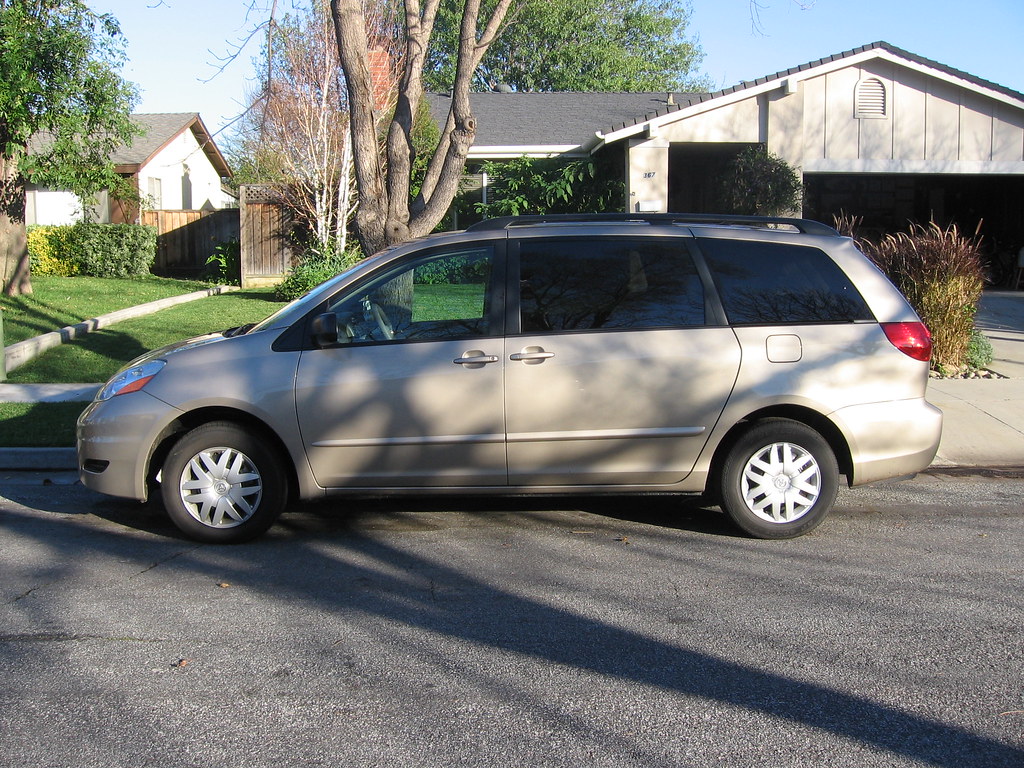
Last Friday, I bought a new car. I traded in my 2003 VW Jetta for a 2006 VW Passat. Volkswagen was having a promotion to try to get existing Jetta/Passat owners to buy the new style Jetta/Passats. So I was able to get a great deal on a car I really liked as soon as I test drove it. It's my third VW in the last six years, so obviously I'm a big fan of Volkswagens. Here's a picture of the car:


Some interesting things about the new car... It included XM Radio. My wife bought me an XM Radio receiver for my old car a couple of years ago, back when I had a 60 mile commute (each way.) I tried on three occasions to get it professionally installed, and every time it did not work out for one reason or another. So after several months, I wound up returning it unused. So now I finally have XM Radio, and I am very pleased with it. I'm a big baseball fan, so I love being able to hear all the games on it. There is also a very nice music selection. I have not even tuned in my old favorite local radio station since I got the car, just because there was always so many good choices on XM. My only complaint is the sound quality. It is definitely better than FM radio, but it claims to be CD quality and that is definitely not the case! They are obviously using some kind of compression (MP3?, maybe not because of piracy concerns?) My car also has a in-dash six-disc CD changer that plays MP3 CDs. I made a couple of MP3 CDs, using my iTunes collection. I rip my CDs using EAC and LAME at a very high setting (--alt-preset-standard or --alt-preset-extreme depending on the type of music.) The sound quality on the MP3 CDs is really good. I can't tell any difference between it and a normal CD in the car, thus it is also much better than XM's quality. XM's quality is particularly bad on the MLB broadcasts, where some weird reverb seems to creep in. Maybe that's because it is typically re-broadcasting local AM broadcasts of the games.

Finally, when finishing the purchase of the car Friday night, the finance person had to print a very complex bill-of-sale document for me sign. This was a huge form that had several blanks spaces on it, so it could be used for the sale of any car. Their method for inserting the car-specific information (like what kind of car, the price, etc.) was to fill in the information in a similar looking desktop application, then print the information on to the form with an old dot-matrix printer. Obviously the desktop application knew about the layout of this giant form, so it could print the values in the right blanks on the form. I kept thinking that surely there must be a more efficient way to do this. The form had two carbon-copies attached also, thus the need for the dot matrix printer so that the information was replicated via the carbon paper.

Anyways, I wasn't able to come up with a better solution in the few minutes I waited for this thing to print out. However, my experience with this technology was not over Friday night. On Tuesday, I got a phone call from the dealership. They said that the printer had misaligned some of the elements on the form, so that some of the information was unreadable. This had caused their bank to not accept the form. So they had printed out a new one, but needed me to come by and re-sign the papers. I did and it was a quick, easy process. It still made me think that this kind of thing must happen a lot, especially with such a seemingly archaic technology. Nonetheless, I still couldn't come up with a better way to print this form that would be as quick, uses as little printer ink, and would allow for triplicate copies so easily.

Monday, May 01, 2006

The Price of Gas

"The Price of Gas" is actually a great song by Bloc Party, but that's not what I'm writing about. Nope, this is about what everybody else in America is talking about, $3.00+ per gallon gas. People are upset about paying that much. They see oil companies announce record profits and they think something is going on. Maybe price fixing is why the price of gas is so high.

It's amazing to me that people even say that. To understand the price of gas, just look at the price of oil. It's also at a record high. If oil costs more, then gas will cost more. As for the oil companies, of course they are making more money. They are not spending more money to produce oil. So if the price of oil goes up, but their costs stay the same, then of course their profits go up. Way up.

So the question people should really be asking, is why is the price of oil so high? That's a complex question, but clearly a big part of it is that their perceived instability in the area that producues a huge amount of the world's oil: the middle east. In case you didn't notice, one of the biggest producers of oil (Iraq) was recently invaded. The same country that invaded Iraq is now threatening action against Iraq's immediate neighbor and fellow oil-producer, Iran. Maybe, just maybe, that has something to do with the price of oil and thus the price of gas.

It's also funny that Democrats want to attack Republicans on this issue. Now this would make sense if they did it from "we need to stop making war" perspective. Instead they are entertaining the oil company/price gouging angle, mostly because of The President's close ties to the oil industry. That's just sad. You would think that a supposedly "green" party would see things differently. They would point out that the price of gas is not really that high. It was artificially low for a long time, on an inflation adjusted scale. That low price spurred the auto industry into producing gas guzzling SUVs and Americans bought them up. Higher gas prices could mean less gas being bought and thus less pollution.

Of course that's theoretical, and there's been very little real evidence for this. I must admit that it has made me re-consider public transportation. We have light rail in Silicon Valley. There's a station very close to my house. To get work, I could take it through San Jose and make one transfer to one of the other light rail lines. It would cost me $1.75 each way, or $3.50 for the round trip. It's 15 miles to my office, or 30 miles roundtrip. My car gets 31 miles/gallon highway and 22 city. For my commute, it averages around 25 miles/gallon. Thus I use 1.24 gallons of gas. Gas needs to cost $2.83 for it to be cheaper for me to take the train, and clearly it's way over that these days. Actually, you can get monthly passes for the train, for $61.25. If you figure 20 commute days per month and do the above math, you get the break even point is $2.47.

So I should take the train, right? Maybe, but maybe not. There are two problems. The biggest problem is that while there is a station close to my house, the nearest station to my office is 1.9 miles from it. That's a long walk. There is a bus I could transfer to that would get me a little closer, and of course I could take my bike. That all leads to the other problem, the time. It takes 1 hour and 16 minutes for the route described above. That's just train time, assuming everything is running on schedule. That doesn't include the time for that last 1.9 miles. By car, it takes me about 25 minutes to get to work. If traffic is horrible, it takes 45 minutes. It's tough to justify losing 1-2 hours of my day just to save $1 on gas.

So I'll probably keep generating green house gasses and sending my money to big oil companies. Maybe that's why the green-er parties aren't celebrating $3/gallon gas. It takes more than high gas prices to save the environment.

NFL Draft

I was pretty busy Friday night (more on that in a future post,) so I was stunned to get home and see the headline that the Houston Texans were taking Mario Williams over Reggie Bush with the top pick in this year's draft. Sure I had heard that the Texans were negotiating with both players. I knew there were pundits saying that new Texan head coach Gary Kubiak did not view running back as a make-or-break position (if Olandis Gary can run for 1100+ yards in Kubiak's system, etc.) but I didn't take any of it very seriously. Apparently the only people who thought that it could even make sense to pick somebody over Reggie Bush were the Texans' front office.

Now don't get me wrong. Mario Williams will probably be a good defensive end. Eventually. Even if he wound up being a great defensive end, this was a big mistake. There is no position in football where a team must have the best player in order to win. Teams can win Super Bowls with average quarterbacks and they can certainly win with average running backs. It proves nothing. A player like Reggie Bush only comes along maybe every 10-15 years. He could have turned the Texans into an elite offense. He would have turned David Carr into a pro-bowl quarterback, thus validating him as the top pick from a couple of years ago. He would not have brought them a Super Bowl on his own. That cannot be done in football. But he would have improved their team dramatically, and given them the center piece to build around for years and years to come.

Not convinced that Bush could have had such effects? Enter Exhibit A, Scott Mitchell. In 1995, Mitchell threw for 4338 yards and 32 touchdowns. He ranked second in passing yards and third in touchdowns. From 1994-1997, he averaged 3547 yards and 23 tds per 16 games played. All this depite having poor leadership abilities and decision making, being big and slow, and not even having a great arm (especially given his size.) But he had Barry Sanders. Every team that faced Detroit planned for Barry Sanders. That's what it would have been like for David Carr with Reggie Bush. Carr is already a better quarterback than Scott Mitchell, but Carr has averaged 2833 yds and 13 tds per 16 games played in his career. The Texans actually had a pretty good run offense last year, but they did not have Reggie Bush. And they won't next year either. So don't be looking for 4388 yards and especially not 32 touchdowns from Carr.

Of course Carr's biggest problem has been sacks. Want to slow down a pass rush? Just run a draw to Bush. You only have to do it once. You could probably get away with just faking it once actually. Or throw a screen pass to Bush. That will do the trick, too. It's not going to make up for a completely porous O-line, but it will slow down the pass rush.

So what now for Bush? He gets to lead New Orleans back into New Orleans. The Saints could become the ultimate feel-good story next year. Bush can "call his shot" like Babe Ruth, promising to score a touchdown for some homeless kid whose parents lost everything in Hurricane Katrina. People in New Orleans might even forget about FEMA finally.

As for Houston... Something happens to teams who do really dumb things. It took Boston 80+ years to overcome trading Babe Ruth. The Portland Trailblazers are not even close to overcoming passing up Michael Jordan for Sam Bowie. Meanwhile, Houston's old team picked up Houston-native, national champion/hero Vince Young and Lendale White on Saturday. Coincidence? Hard to say. All I can suggest for Houston is that they make a list of all the bad things they have done and start trying to come clean. It may be the only way to appease karma.

Tuesday, April 18, 2006

Blast from the Past

My wife and I were driving behind a Honda Ridgeline recently.

She pointed out how visually it was very similar to another Japaneese "truck" from the 80's, the Subaru Brat:

Too funny, and too true!

Thursday, April 13, 2006

More Sports

Already one sports post this week, but there a couple of things I need to write about.

The Masters
Phil Mickelson is my favorite golfer, by far. I started liking him because he's a lefty golfer. I learned to golf in college, and I golf left-handed. I was always convinced that most courses were really designed for righties and that lefties were at a disadvantage. This is probably not true, but that got me rooting for Phil. Then I was always annoyed about how much criticism he took for not winning majors and for playing too risky on the golf course. One of my friends pointed me to a great article recently on ESPN, where one of the things discussed was why Tiger Woods is so much better than Phil. The theory was that Tiger worked harder than Phil because Tiger was not afraid to not have an excuse. Phil would not work as hard because he always needed to have an excuse ready. There was some insight in this theory, but it's wrong. Phil doesn't work as hard as Tiger because Phil has been married for many years and has young children. Tiger became the greatest ever while being single with no other obligations in his life but his golf. Tiger is often compared to Michael Jordan. Few will disagree that Jordan was the greatest basketball player ever, and perhaps the greatest pro athlete ever. However, the devotion to his arguably resulted in him being a terrible (and now divorced) husband and father. I digress. Way to go Phil. Two majors in a row!

Baseball
I love opening week. I got this MLB Extra Innings package for free this week. It wound up being good timing as this weekend I was home alone. So I got to watch a few games I wouldn't have seen otherwise. This package is still not that great. There are games that aren't shown for no obvious reason. Last night there was a Houston-Washington game that wasn't shown. It wasn't on any of the other channels I get, so I have no idea why it wasn't shown. Also, these sports packages are a waste until they start being broadcast in hi-def. It's ridiculous if I'm paying $160 to get all these games but they're in standard defintion. This is especially true of NFL Sunday Ticket. If you're watching a game on Sunday Ticket, there is almost always going to be another game on your local network that's in hi-def. Anyways, it was nice to get to watch some extra baseball this weekend. I got to see Johann Santana pitch this morning and Alex Rodriguez take Bartolo Colon deep (yet again) this afternoon.

Gator Basketball
I was incredibly happy to see the announcement that Joakim Noah, Corey Brewer, and Al Horford are all staying for next year. Of course there's still time for them to change their mind, but I don't think they will. There's going to be a lot of pressure to repeat now, but that's a good kind of pressure.

Ricky Williams
For the first time in recent years, I've really got to root for Ricky as he goes before the NFL to appeal a violation of their drug policy. There's no official word, but a lot of people have said that his violation was not from marijuana, and that it is most likely some holistic-mecinal herb. That holistic medicine craziness has helped him kick his marijuana addiction, so hopefully the NFL will be understanding. Of course I am being selfish mostly. I think Miami's hot ending to last season and acquisition of Daunte Culpepper makes them one of the favorites to win the Super Bowl next year. Ronnie Brown is going to have a huge season, but Ricky is a great insurance policy and can step in at anytime and make big plays.

Brett Favre
Green Bay just needs to trade him or cut him. The guy wants to play, but not for Green Bay, but he's too classy to come out and say out. After all he's done for that franchise, don't they owe him that much? They're going to suck next year, with or without Favre. Why make your franchise's savior endure that at the end of his career. It would really scare me, but wouldn't Favre as a Bronco be scary? Or Favre as a Charger (I'm far from convinced on Rivers.) Or Favre as Buc (same thing with Simms.)

Mike @ developerWorks

I recently wrote an article for IBM's developerWorks. It was the first of two articles I've written for IBM. The second one should be online in another week or two. It was a fun experience working with their editors, and hopefully it won't be the last articles I write for IBM.

Both articles have to do with Apache's Geronimo application server. It's obvious to compare Geronimo with the "incumbent" open source Java application server, JBoss. I won't get too far into that. Their architectures are really quite similar. I would say that Geronimo is the more "crafted" of the two. It does less things than JBoss, and it's a little more "stick to the J2EE spec." However, I think when it comes to the standard app server features, it does them a little better than JBoss and it's code is more elegant. I think this is a direct result of it being more of a "true" open source project, where many different developers can contribute. JBoss is much more controlled. If you're not a JBoss employee, you're probably not going to contribute to JBoss.

Tuesday, April 04, 2006

National Champions

I've been dying for three weeks now to write about the Florida Gators basketball team. I didn't want to jinx them. I've seen very good Gator teams lose to team they should beat far too many times. I knew this team was different, but I didn't want to tempt fate.

Now I don't have to worry about that. The season is over and The Gators are national champs! They've had such a great season. A lot of people didn't notice them too much until The Tournament. It's easy to forget they were undefeated in late January and ranked #1. Of course they promptly lost six of their next eleven games. They had finally shown their age. The Gators were unranked at the beginning of the season, mostly because they had lost their star players from the previous year and were incredibly inexperienced. They must have learned a lot from that tough stretch in February, and were unstoppable as soon as March arrived. They easily won the SEC tournament, avenging their two losses to South Carolina (who went on and won the NIT) in the finals. Only Georgetown challenged them in The Big Dance.

So what's next for The Gators? Well a lot of that depends on if Joakim Noah turns pro. On one hand, it's hard to imagine his stock going up anymore with another year. Anybody who blocks 29 shots in The Big Dance is going to be an NBA player. He should at least have Theo Ratliff or Ben Wallace potential, and that's enough to guarantee a high pick in the draft. However, I think Joakim has a lot more offensive potential than Ratliff or Wallace. He doesn't have a great outside shot, but he can get his own shot off, especially in the paint. He can handle the ball and is a good passer (even better than fellow future NBA-er Al Horford.) With another year of seasoning, it's not a stretch to imagine Joakim developing into an Alonzo Mourning kind of player. Just look at how much he improve his game via his incredible work ethic.

If Joakim stays, then I really think Horford and Corey Brewer will stay. I think they both have NBA millions in their future, but still might stay even if Joakim leaves. Of course if they all stay ... it's hard to imagine who is going to beat them next year. But let's not start jinxing next year already!

Who can blame them if they all turn pro? They've brought a championship to Florida. It's the first college basketball championship for any team from the state, but I don't think it will be the last. Florida has been a contender for a decade now, starting with Lon Kruger's 1993 team that lost in the Final Four against Grant Hill and Duke. FSU has been compettitive in the ACC for several years now. They had a good team in the 90s also, with Sam Casell and Bob Sura. Miami was also a dangerous team this year, and should be even more dangerous next year. It may be awhile before the state of Florida becomes more a basketball state than North Carolina, but don't be surprised if it happens. Look at all the talent the state produces and the great football and baseball teams from the big three colleges. It's just a matter of time before Dick Vitale is announcing Florida-FSU games on ESPN in primetime...

Monday, April 03, 2006

Childfree?

I intended to write today about how happy I am that baseball is back, and maybe even indulge in some "let them use steroids!" ranting. However, I read this little article on the BBC about the so-called "childfree-lifestyle." It caused me some mixed emotions, so I thought I'd write about it instead.

Childfree women are women who do not want to have children. Ever. Not surprisingly such people can be the brunt of criticism. Society has always put a premium on families. Some people would argue that this is just another example of religious and cultural conformity, but obviously there are underlying advantages. A society that doesn't procreate is a short lived society. Further, people with children are probably more likely to work, pay taxes, obey laws and have kids that do all those things, too. I'm sure there have been some kind of studies on these things, but I'm not quoting such things here. This just seems like common sense.

Family size in industrialized nations has been shrinking for a long time now. Thus it was inevitable to start seeing more people who don't have children at all. Personally that doesn't bother me at all. I know how difficult it is to raise children. It is draining physically, emotionally, and economically. I think it's better for people who can't handle such things to not have children. I'm not about to start telling anybody what to do on anything, especially such an important decision.

Now I have to admit that a part of me suspects that many people who chose not have children are actually quite capable -- at least from a physical, emotional, and economic perspective. So it's easy tempting to label such people as being selfish. I won't do that. They have no obligation to have children. Nobody should make them. I think there is a "natural" desire among people to procreate. Again, there are some obvious Darwinian advantages to such a desire. So it's probably a tough decision for people to chose to go against that.

Things don't stop there. Of course some of the no-kid-and-proud-of-it types start to get rude about the whole thing. Check out this quote from a British woman is happily childfree:
I think that people who have three children are encroaching on the planet's resources - I can't believe the amount of waste that children produce.
Like I said, rude. Maybe once Jane gets past her peak productivity years, somebody should euthanize her all in the name of conservation of resources.

This is just the tip of the iceberg. As mentioned earlier, societies have always placed a premium on families. Today that is reflected in tax-breaks, at least in the United States. Of course I think we're all taxed way too much anyways, so it's hard for me to be against any particular tax break. I can understand some people thinking it is unfair, but it is an inevitable consequence of progressive taxation.

Progressive taxation is based on the principal of taxing marginal utility. If you're rich you derive less additional utility for each extra dollar you make, than somebody who is poor. Why? Well the poor person is going to spend the money on something like food, clothing, basic shelter, etc. The rich person will spend it on something less essential, i.e. something with less utility. That's why it's "fair" to have higher tax brackets for rich people.

By the same token, a person with a child receives has more marginal utility from additional money than somebody with no child. Why? The person with the child will use that money to feed, clothe, etc. for the child, thus the higher utility.

So maybe if you did away with progressive taxation, then you could justify no tax breaks for families. I don't know if that's what these childfree advocates want or not, i.e. a flat tax. If not, then that would certainly be an inconsistency in their arguments and would suggest that their stance is purely motivated by self-interest (which is ok, but generally not a good enough reason to get the majority to agree with you.)

Now some of the other things being argued against is government guaranteed maternity/paternity benefits. We don't have much of those in the US, though they are more common in Canada and Europe (including Great Britain.) I would have to concur on this one. The government should not force an employer to give maternity or paternity benefits. It should be between the employer and the employees. A government mandate of it inevitably leads to the situation where an employer would hire an employee, but can't because of the potential cost from . So instead the employer does not hire the employee, who then goes unemployed.

Monday, March 27, 2006

Race Results

Yesterday I ran in the San Jose Spring Run. I ran the 5K run. I wrote about the race a few weeks ago. It was a great experience. I ran 31:58 and finished 426 out of 1436. I finished 252 out of 603 men, and 51 out of 103 in my division (men, ages 30-39.) You can see all the results here. To see my official results, put in bib #1101. I was thrilled with the results! Here are some pictures of me running and of my family cheering me on.

This was my first race, and running in a race is a lot different than just running on your own each morning. Of course there's traffic -- passing slower runners and being passed by faster runners. For me it's easier running on a course that I know well. That makes it easier to keep a steady pace. I was also a little sore after the race, which surprised me. I run 5 miles each morning, so why would a 3.1 mile run make me sore? It wasn't the pace, since I've actually run slightly faster 3 mile splits at the start of my 5 mile run than I ran yesterday. I think maybe it's just the difference of running on the sidewalk vs. running on the road. Who knows?

So what's next? There were tons of people handing out things after the finish line. I had no idea what that was all about and was so tired that it took me a minute to process. Most of the people were handing fliers -- fliers for running clubs and other races in the area. I took a couple, and one was for The Human Race, in Mountain View on May 13. My sister Jeana will be in town visiting then, so it's great timing. I will probably run the 5K, and shoot for a time under 30 minutes.

Tuesday, March 21, 2006

Three Years in Iraq

A little over three years ago now, the United States invaded Iraq. I remember all too well where I was when it happened. I was flying to Las Vegas to enjoy the opening weekend of the NCAA Men's Basketball Tournament with my old college buddies. It was my first time flying on JetBlue, and thus I got to watch CNN live as the invasion began. Or at least "Shock and Awe" began.

It was a sobering event to happen on what was otherwise a really fun trip. My friends and I did our share of gambling, I got to lose some money on the University of Florida. Iraq kept coming up in conversations over dinner or while enjoying drinks at the Bellagio. I have an interesting mix of liberal and conservative friends, but they definitely lean right as a group. My main point of contention that weekend was that the US was not being honest about why we were invading Iraq. We all knew already that Iraq did not have WMDs. I was willing to concede that maybe invading Iraq was still justified, but I just hated that we were lying about why we were doing it.

The problem is that when your leaders are lying about their reasons, you really have to wonder about their true reasons. Maybe those reasons are still good, but what if they are not? If these reasons are kept secret, don't you have to suspect that there's something not so good about them?

That line of thought leads you into Michael Moore-land. Was President Bush just looking for any excuse to invade Iraq, maybe for reasons of revenge? Was this simply an attempt to secure oil, caused by a perception of instability in Saudi Arabia after 9/11 (most of the terrorist were from Saudi Arabia after all)? Or was this part of some grand neo-con plan to "introduce" democracy and capitalism into the Middle East?

I'm not saying any one of those things is correct. My point is that to some degree, you must entertain such theories because of President Bush's dishonesty. As for Iraq today, and the mess we are in ... I'm not going to claim to know what to do now. Just because we may have had less than noble reasons for invading does not necessarily mean that withdrawing now would be the right thing to do. It seems like nobody thought twice about the US's decision to keep a unified Iraq, despite its internal conflicts. It hardly seemed very democratic, telling people that they had to be part of the same country and they had no choice about it. Again it makes you wonder about the motivation, since clearly a unified Iraq is easier to pump oil out of.

If a full blown civil war breaks out (has it already?) can the US keep claiming that everyone it shoots is a terrorist? The sins of this invasion just keep growing and growing. It is reminiscent of the Cold War, where the US again and again let strategic goals (containment of Communism) caused it to back dictators (and future terrorists!) and thus creating more support for the very thing (Communism) that it was trying to prevent. It doesn't take a rocket scientist (or a social scientist for that matter) to figure out that the US presence in Iraq has certainly driven more people to the suicide-bombing-is-endorsed brand of Islam. What would have to happen for President Bush to decide to pull out our troops? If the answer is "nothing could cause that" then we certainly are in a lot of trouble for a lot of years to come.

Google Finance

Google's new financial site, Google Finance has been covered by many today. It is widely billed as an answer to Yahoo's very successful Yahoo! Finance site. Many people like it's neato features, like the flash charts and liberal use of AJAX. Others are disappointed since it doesn't really offer much that Yahoo doesn't already offer. Personally I like it, and for one simple reasons. Ads. Or the lack of ads, I should say. I hate all the ads cluttering up Yahoo Finance. It has those brokerage ads and the big ads on the side, ugh. You have to imagine that even if Google does start mixing in ads, they will be done similar to search ads or ads in GMail. So right there, advantage Google. I also like Google's attempt to correlate news and movements in stock price. Maybe the SEC should like at this data for a company and start investigations whenever they see significant stock movement without news or anticipation of news... Speaking of Google, I finally got my Google Pages account. I'll need to play with that and maybe move my homepage off Comcast.

Sunday, March 19, 2006

Searching for Mt. Hamilton

That past month or so in the Bay Area has been cold and wet. One of the few nice things about such weather is the snow it puts on top of many mountains in the Bay Area. I used to live near one of the big mountains out here, Mt. Diablo, in the East Bay. There was never too much snow on it in the two years I lived near it. Now I live in San Jose, and the mountains down have gotten a lot of snow this winter. It's fascinating for me to see the snow covered peaks in the distance. Snow covered mountains are quite novel to a native Floridian.

On the local news I've seen stories on people taking their kids up into the mountains to play in the snow. That sounds like something that might be fun to do one day when my kids are older. Just for kicks, I thought I might figure out how much of a drive it was up to the highest peak in the South Bay, Mt. Hamilton. There are so many great mapping tools on the web now, it should be easy to get directions to a local landmark.

Or that's what I thought. I immediately went to local.google.com and searched for mt hamilton near san jose. The results are terrible. Look at the top result, Mt. Hamilton Grange. Egads. What's worse is that none of the results are even all that close (geographically) to Mt. Hamilton. They're all businesses and what not, so of course they're not up on the mountain.

So I tried Yahoo local. Its results were basically the same, still terrible. I even tried MSN, err Windows Live Local. It was just as bad. Then I realized that Mt. Hamilton is a mountain. It does not sell anything. Thus search engines don't really care about it, at least not the local variety.

Now if you just search on Google for Mt. Hamilton, you find much more relevant results. Of course you don't find directions to it, which was the whole point.

All is not lost though. Luckily I already knew about the observatory on top of Mt. Hamilton, Lick Observatory. A search for Lick Observatory near San Jose produces similarly bad results on Google Local. However, a similar search on Yahoo! produces much better results.

So alas you can find directions to non-commercially viable locations, it's just not easy. Perhaps Google Earth is better suited for something like this, I haven't tried it. The search guys need to address this. I'm sure I'm not the only person to ever search for a mountain, or a beach, or a lake with the intent of getting directions to said landmark. If a search engine is good for that, then I'm a lot more likely to use that same search engine to look for directions to a resteraunt, car dealership, etc.

Technorati Tags: , , ,

Monday, March 06, 2006

The Race Is On

I'm running in my first race in a couple of weeks, The San Jose Mercury News Spring Run. There's actually three races, a 10 K race, 5k run, and a 5k walk. I thought about doing the 10K, since that's closer to the distance I run each morning, but figured I would just do the 5k run since it is my first race. My top goal is not to come in last and/or be beaten by people in the 5k walk. Beyond that, I'd like to run a time of around 30 minutes. I've ran some 7-8 minute miles during my morning runs, but have concentrated much more on distance than speed. So I'll be happy with something in the low 30-minute range. The race is less than three weeks away, so hopefully these winter storms will clear out by then...

Friday, March 03, 2006

The Katrina Video

By now I'm sure you've seen the Katrina video, showing President Bush being briefed on the eve of Hurricane Katrina's landfall. As this article from the San Jose Mercury points out, this video suddenly forces us to reconsider who was at fault. Most people blamed then-FEMA directory Michael Brown, but the video sure makes him look a lot better. He seems to be the only top official who is really worried and trying to do anything about the impending disaster. Nope, it sure looks like his boss, Homeland Security head Michael Chertoff , and of course the "I'm in the middle of yet another vacation" President Bush, are the ones to blame.
It's incredible to watch Bush just sit there and say nothing through the whole thing. Now one might say that he is taking it all in and thinking hard about what to do, but that's not the impression I got. He seems very passive and disinterested, and maybe even annoyed that he has to sit through all of this. Many are pointing out that the video contradicts the President's statements about how nobody could have foreseen the levees breaking in New Orleans, since he is told in the video that that is exactly what's going to happen. That just seems to be more evidence that he really wasn't paying attention in this video. It's not that he was told and then lied about it. He was told, but wasn't listening and thus did not remember that he was told.


Technorati Tags: ,

Wednesday, February 22, 2006

EIT?

  This morning I saw this article on News.com: Europe aims for its own MIT | CNET News.com. Now of course I was immediately annoyed by the title. Why take aim at the world's #2 tech school, why not shoot for #1? Then after reading the article, I realized that the EU does not mention MIT at all, so its inclusion in the title (though not the body) of the article is simply the ignorance of the article's author, Jo Best. Or maybe it's not ignorance, just typical lowest-common-denominator/pop-culture, i.e. MIT is to higher learning as McDonald's is to fine dining.
  Anyways, after reading the article, I couldn't help but be amazed that the EU would really entertain such a foolish idea. Do they think that the great American colleges are a product of government sponsorship? Obviously they have noticed that universities often work with private industries, but they don't do that because of some government commission "encouraging" then to do so. American universities are not run by some government commission. This is just another classic example of central planning vs. free enterprise, and we've all seen what wins out there.

Monday, February 06, 2006

Instant Classic

Super Bowl XL is an Instant Classic. Ok, so not really. It was actually a pretty poorly played game in most ways. Last year's Super Bowl was really pretty good, except for Donovan McNabb falling apart at the end of the game and forgetting how to run a hurry up offense. The year before, New England over Carolina, was outstanding. So I guess we were due for a bit of a clunker. It's amazing that Ben Roethlisberger and Troy Polamalu could both play so badly and yet The Steelers won. The truth is that Pittsburgh has a lot more playmakers on their team, and that depth was really the difference.
Pittsburgh deserved it, no doubt. They got lucky against Cincy, with Carson Palmer going down to injury. I really don't think they would have won that game had Palmer not gone down so early in the game. Kitna had decent success, especially at first, so it's easy to "extrapolate" a big passing game for Palmer. They were certainly used to Pittsburgh's pressure defense. So they got lucky. However, The Steelers played great against both Indianapolis and Denver. Of course they still needed a little bit of good luck (Vanderjagt's missed FG) to counter the bad luck (Bettis fumble,) but they definitely out-played Indianapolis -- who was clearly the best team in the regular season. They played up to the same level against Denver, and crushed them. If they had played anywhere near that yesterday, it would have been more like 42-3 or so.
Without Polamalu's usual explosiveness and with Joey Porter contained by Walter Jones (which I didn't think would happen, but did,) Seattle could really execute the offense. Yet they just kept choking away points. Penalties in the end-zone, missed field goals, bad clock management, etc. I would have been ready to jump off The Space Needle if I was a Seahawks fan. They should have been up by at least 10 at halftime, and the game would have been radically different.
I don't think Roethlisberger's thumb was bothering him yesterday, I think he was just really nervous. And he doesn't have a coach who knows how to calm down a young quarterback. It's the same thing that happened against New England in the AFC Championship a year ago. Bill Cowher is a good coach, but one would have to say that Mike Holmgren could have probably done a better job getting Roethlisberger to play well yesterday. Big Ben certainly has the ability, as he demonstrated against Cincinnati, Indianapolis, and Denver. You could just the adrenaline going crazy in him, with him taking on tacklers and throwing hard blocks.
Luckily for him it didn't matter. Big plays from Willie Parker and Hines Ward were more than enough to beat a Seattle team that could not put points on the board despite being able to move the ball pretty much at will.

Side Note 1: It was a good game for ex-Florida Gators. Darrell Jackson played even better than his stats, with two touchdowns taken off the board. Max Starks was also solid for Pittsburgh, throwing a key block on Willie Parker's score. Only bad spot was Maquand Manuel, who had played well for Seattle this year, filling in for Ken Hamlin. Manuel actually was playing pretty well until he got injured in the first quarter and did not return.

Side Note 2: I did not realize until yesterday that Mike Holmgren used to coach at Oak Grove High School. I run by Oak Grove HS every morning, as it's about two miles from my house. I knew that Holmgren grew in San Francisco, but did not know he had coached high school football in San Jose before moving on to BYU.

Thursday, February 02, 2006

Stern Pirates

I saw a piece on TV this morning and read this article about people pirating episodes of Howard Stern's radio show on P2P networks. Nothing here is surprising. Of course people are going to pirate Stern's broadcasts. Of course Sirius is having a fit and promising to go after the pirates. It all begs the question, haven't we learned anything?
Look at the evolution of the original Napster, Kazaa, and now iTunes. People want to download music, they don't care about laws (Napster.) Shutting down one distribution method for this does no good as other, more efficient ones replace it (Kazaa.) The only way to really combat this is to offer the same thing legally and for a low price (iTunes.)
So the obvious thing that Sirius should do is offer Stern's shows on iTunes. They should offer them on a show-by-show basis for the iTunes standard of $0.99. In addition to that, they could offer a subscription via iTunes podcasts for say $15 per month. First off, anybody who regularly listened to Stern would spend way more money going this route than paying $13 per month for a Sirius subscription. They'd be paying more for less, since the $13 gets you a lot more than just Stern's four hours in the morning. So it's hard to see how they would be hurting themselves with this move. Additionally, it would let people taste-test Stern on Sirius. These are people who would never throw down the money for a Sirius setup and sign a subscription. However, some of those people are bound to do just that after taste-testing Stern on Sirius (assuming Stern is as entertaining as Sirius and the $500M they are paying him think he is.) So it should actually boost Sirius subscription rates in the long run. Finally, people have shown that if you give them a legal, low price option, they will pay for it over the illegal free option. Apple is closing in on a billion song sales on iTunes after all.

Bloc Party

I picked up Silent Alarm by Bloc Party this weekend. It's an immediately catchy record. Lots of great rhythms and guitar riffs. It's easy to see why they've been compared a lot to Franz Ferdinand. I think Silent Alarm is actually a much better record than either of Franz Ferdinand's records. That's mostly because of the production. Bloc Party sounds much more modern than Franz. They also have a lot more machismo and that can be good thing.
Anyways if you're a fan of guitar-driven, alterna-rock a la Jane's Addiction or Built to Spill, definitely give a listen to Bloc Party. Actually the record really reminds me a lot of Radiohead's The Bends. A lot of times Brits don't like to take themselves too seriously, but Bloc Party definitely pulls it off.